Inflamación en el síndrome de ovario poliquístico: Rol en la etiopatogenia y sus implicancias clínicas
Resumen
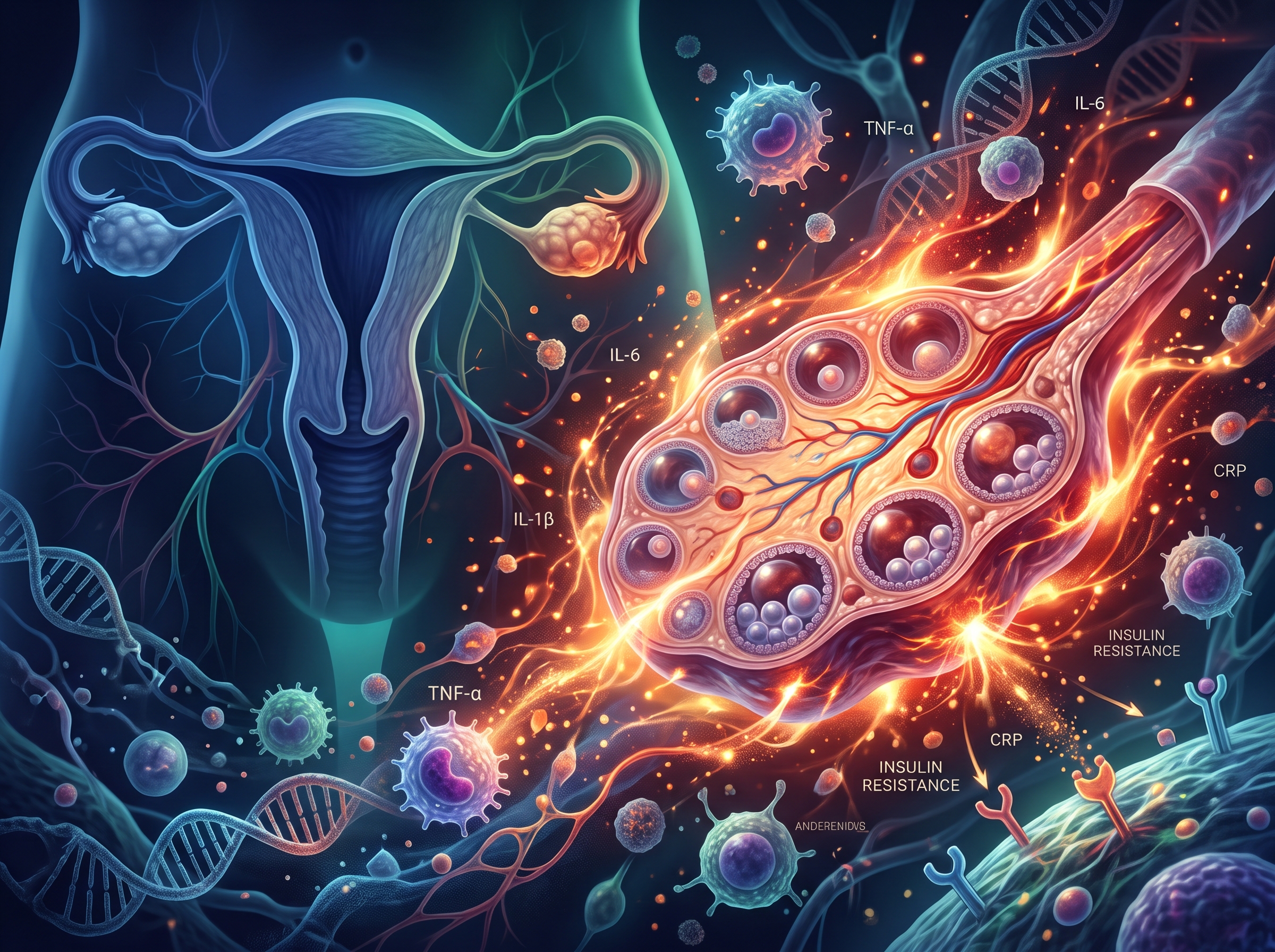
El síndrome de ovario poliquístico (SOP) es uno de los trastornos endocrinos más frecuentes en mujeres en edad reproductiva, caracterizado por hiperandrogenismo, disfunción ovulatoria y morfología ovárica poliquística. Más allá de las características reproductivas, el SOP está fuertemente asociado con alteraciones metabólicas como la resistencia a la insulina, la dislipidemia, la obesidad y un mayor riesgo cardiovascular. La evidencia reciente implica a la inflamación crónica de bajo grado como un mecanismo central que vincula las anomalías metabólicas y reproductivas en el SOP. Las mujeres con SOP demuestran consistentemente niveles elevados de mediadores inflamatorios que, se cree, deterioran la señalización de la insulina, exacerban el hiperandrogenismo y alteran la función ovárica, contribuyendo a la anovulación y a una mala calidad del ovocito. Clínicamente, los biomarcadores inflamatorios se correlacionan con la obesidad, la resistencia a la insulina y los niveles de andrógenos, lo que sugiere un valor pronóstico para la estratificación del riesgo cardiometabólico. Las intervenciones antiinflamatorias, incluyendo modificaciones en el estilo de vida, sensibilizadores a la insulina, estatinas, nutracéuticos e inhibidores de citoquinas emergentes como la anakinra, demuestran potencial para mejorar tanto los resultados reproductivos como los metabólicos. Comprender los fundamentos inflamatorios del SOP no solo avanza nuestro conocimiento etiopatogénico, sino que también abre vías para estrategias diagnósticas y terapéuticas dirigidas a mitigar las complicaciones a largo plazo.
Citas
Dumesic DA, Oberfield SE, Stener-Victorin E, Marshall JC, Laven JS, Legro RS. Scientific Statement on the Diagnostic Criteria, Epidemiology, Pathophysiology, and Molecular Genetics of Polycystic Ovary Syndrome. Endocr Rev. 2015;36(5):487-525. doi: 10.1210/er.2015-1018
Escobar-Morreale H. Polycystic ovary syndrome: definition, aetiology, diagnosis and treatment. Nat Rev Endocrinol.2018;14:270–284. doi: https://doi.org/10.1038/nrendo.2018.24
Banerjee S, Cooney LG, Stanic AK. Immune Dysfunction in Polycystic Ovary Syndrome. Immunohorizons. 2023;7(5):323-332. doi: 10.4049/immunohorizons.2200033.
Spritzer PM, Lecke SB, Satler F, Morsch DM. Adipose tissue dysfunction, adipokines, and low-grade chronic inflammation in polycystic ovary syndrome. Frontiers in Endocrinology (Lausanne).2020;11:604. doi:10.3389/fendo.2020.00604
Patel S. Polycystic ovary syndrome (PCOS), an inflammatory, systemic, lifestyle endocrinopathy. Clinical Endocrinology (Oxford). 2018;89(5):545–552. doi:10.1111/cen.13802
González F. Inflammation in polycystic ovary syndrome: underpinning of insulin resistance and ovarian dysfunction. Steroids. 2012;77(4):300–305. doi:10.1016/j.steroids.2011.12.003
Liu R, Zhang C, Shi Y, Zhang F, Li L, Wang X, et al. The role of chronic inflammation in polycystic ovary syndrome: a systematic review and meta-analysis. Journal of Ovarian Research. 2021;14:38. doi:10.1186/s13048-021-00781-1
Liu Y, Liu H, Li Z, Fan H, Yan X, Liu X,et al.The Release of Peripheral Immune Inflammatory Cytokines Promote an Inflammatory Cascade in PCOS Patients via Altering the Follicular Microenvironment. Front. Immunol.2021;12:685724. doi: 10.3389/fimmu.2021.685724
Li Q, Zhou JM, Yang J, Zhang H, Wang H, Guo X, et al. Increased granulosa cell oxidative stress and NLRP3 inflammasome activation in women with PCOS. J Clin Endocrinol Metab. 2020;105(10):dgz315
Bansal B, Thazhuthadath Kishore A, Kathiresan S, Farook Ghachi A, Pradhan S, Paul S, et al. A Systematic Review of Inflammatory Markers in Polycystic Ovary Syndrome (PCOS) and Meta-Analysis of Interleukin-6 (IL-6) in Case-Control Studies. Cureus. 2025;17(4):e82350. doi: 10.7759/cureus.82350
Chen Y, Wu Y, Xu Y, Zhong J, Chen J, Zhao Y. Elevated serum IL-18 levels in polycystic ovary syndrome: correlation with insulin resistance and hyperandrogenism. J Reprod Immunol. 2019;132:29–35
Bahri Khomami M, Joham AE, Boyle JA, Piltonen TT, Arora C, Silagy M, et al. Increased interleukin-6 levels in women with PCOS: a systematic review, meta-analysis and meta-regression. Hum Reprod Update. 2019;25(5):706–720.
Zeb S, Gul R, Ashraf, Rumman. Comparative Analysis of Interleukin-6 Levels in Polycystic Ovary Syndrome (PCOS) Patients With and Without Insulin Resistance. Cureus. 2025;17(4):e81878. doi: 10.7759/cureus.81878.
Geraci G, Riccio C, Oliva F, Gabrielli D, Colivicchi F, Grimaldi M, et al. Women with PCOS have a heightened risk of cardiometabolic and cardiovascular diseases: statement from the Experts Group on Inositol in Basic and Clinical Research and PCOS (EGOI-PCOS) and Italian Association of Hospital Cardiologists (ANMCO). Front. Cardiovasc. Med. 2025; 12:1520490. doi: 10.3389/fcvm.2025.1520490
Deng H, Chen Y, Xing J, Zhang N, Xu L. Systematic low-grade chronic inflammation and intrinsic mechanisms in polycystic ovary syndrome. Front Immunol. 2024;15:1470283. doi: 10.3389/fimmu.2024.1470283.
Ha LX, Li WX, Du YD, Yuan YY, Qu XX. Tumor Necrosis Factor Alpha Level in the Uterine Fluid of Patients with Polycystic Ovary Syndrome and Its Correlation with Clinical Parameters. J Inflamm Res. 2022;15:6015-6020. doi: 10.2147/JIR.S382808.
Padder KA, Jahan N, Yousuf MA, Shah IA, Bhat GA, Khurshid R, et al. Deciphering the interplay between oxidative stress and inflammation in polycystic ovary syndrome: outcome of a case-control study. J Ovarian Res. 2025;18(1):196. doi: 10.1186/s13048-025-01734-y
Shang J, Wang S, Wang A, Li F, Zhang J, Wang J, et al. Intra-ovarian inflammatory states and their associations with embryo quality in normal-BMI PCOS patients undergoing IVF treatment. Reprod Biol Endocrinol. 2024;22(1):11. doi: 10.1186/s12958-023-01183-6.
Kabakchieva P, Gateva A, Velikova T, Georgiev T, Yamanishi K, Okamura H, et al. Elevated levels of interleukin-18 are associated with several indices of general and visceral adiposity and insulin resistance in women with polycystic ovary syndrome. Arch Endocrinol Metab. 2022;66(1):3-11. doi: 10.20945/2359-3997000000442.
Yang Y, Qiao J, Li R, Li MZ. Is interleukin-18 associated with polycystic ovary syndrome? Reprod Biol Endocrinol. 2011;9:7. doi: 10.1186/1477-7827-9-7.
Banerjee S, Jaimes FL, Mohamed MA, Zettel A, Graupe NG, Cooney LG, et al. High-dimensional immune profiling of follicular fluid and systemic circulation reveals distinct immune signatures in women with polycystic ovary syndrome. Front. Immunol.2025; 16:1628031. doi: 10.3389/fimmu.2025.1628031
Wang C, Feng Y, Chen Y, Lin X, Li X. Proximity extension assay revealed novel inflammatory biomarkers for follicular development and ovarian function: a prospective controlled study combining serum and follicular fluid. Front. Endocrinol. 2025;16:1525392. doi: 10.3389/fendo.2025.1525392
Mejia-Montilla J, Álvarez-Mon M, Reyna-Villasmil E, Torres-Cepeda D, Santos-Bolívar J, Reyna-Villasmil N, et al. Factor inhibidor de la migración de macrófagos en mujeres obesas y no obesas con síndrome de ovarios poliquísticos. Endocrinol Nutr. 2015;62:31–37
Glintborg D, Andersen M, Richelsen B, Bruun JM. Plasma monocyte chemoattractant protein-1 (MCP-1) and macrophage inflammatory protein-1alpha are increased in patients with polycystic ovary syndrome (PCOS) and associated with adiposity, but unaffected by pioglitazone treatment. Clin Endocrinol (Oxf). 2009;71(5):652-8. doi: 10.1111/j.1365-2265.2009.03523.x
Orszulak D, Niziński K, Matonóg A, Zięba-Domalik M, Stojko R, Drosdzol-Cop A. Adipokines as biochemical marker of polycystic ovary syndrome in adolescents - review. Front Endocrinol (Lausanne). 2025; 16:1475465 doi: 10.3389/fendo.2025.1475465
Hamad SS, Ahmed SN. Determination of insulin resistance, adiponectin and leptin in overweight women with polycystic ovarian syndrome. Middle East Fertil Soc J.2025; 30:29. https://doi.org/10.1186/s43043-025-00243-8
Prasad GS, Saikia UK, Bhuyan AK, Baro A. A Study of Serum Adiponectin Levels in Patients with Polycystic Ovarian Syndrome and its Correlation with Various Cardiometabolic Risk Markers. J Hum Reprod Sci. 2023;16(4):299-306. doi: 10.4103/jhrs.jhrs_95_23.
Guo X, Chen L, He J, Zhang X, Shui X. Genetically predicted high sex hormone binding globulin was associated with decreased risk of polycystic ovary syndrome. BMC Women's Health.2024; 24: 357. https://doi.org/10.1186/s12905-024-03144-6
Ciura D, Owczarek AJ, Franik G, Kocełak P, Markuszewski L, Madej P, et al. A cross-sectional study of the association between circulating sex hormone-binding globulin levels and selected adipokines in women with polycystic ovary syndrome. Front. Med. 2023; 10:1183961. doi: 10.3389/fmed.2023.1183961
Yousuf SD, Rashid F, Zargar MA, Mudassar S, Islam K, Nazir S et al. Genotypic and metabolic implications of tumor necrosis factor-α (TNF-α) −1031 (T/C) polymorphism in Kashmiri women with polycystic ovary syndrome (PCOS): a case–control study. Egypt J Med Hum Genet.2025;26(1):150. https://doi.org/10.1186/s43042-025-00778-5
Nestler JE, Jakubowicz DJ, de Vargas AF, Brik C, Quintero N, Medina F. Insulin stimulates testosterone biosynthesis by human thecal cells from women with polycystic ovary syndrome by activating its own receptor and using inositolglycan mediators as the signal transduction system. J Clin Endocrinol Metab. 1998;83(6):2001-5. doi: 10.1210/jcem.83.6.4886
Xu T, Xiang Y, Huang Z, Zhu Q, Wu H, Cai J, et al. Hyperandrogenism-mediated YAP activation drives ovarian inflammation and pyroptosis in PCOS: implications for follicular dysfunction. J Ovarian Res. 2025;18(1):170. doi: 10.1186/s13048-025-01757-5
Fox CW, Zhang L, Sohni A, Doblado M, Wilkinson MF, Chang RJ, et al. Inflammatory Stimuli Trigger Increased Androgen Production and Shifts in Gene Expression in Theca-Interstitial Cells. Endocrinology. 2019;160(12):2946-2958. doi: 10.1210/en.2019-00588
Raja-Khan N, Urbanek M, Rodgers RJ, Legro RS. The role of TGF-β in polycystic ovary syndrome. Reprod Sci. 2014;21(1):20-31. doi: 10.1177/1933719113485294
Wälchli-Popovic M, Monnerat S, Taylor AE, Gilligan LC, Schiffer L, Arlt W, et al. Effects of interleukin-1 receptor antagonism in women with polycystic ovary syndrome—the FertIL trial. Front. Endocrinol.2024;15:1435698. doi: 10.3389/fendo.2024.1435698
Wang Y, Yang J, Wang Y, Chen Y, Wang Y, Kuang H, et al. Upregulation of TXNIP contributes to granulosa cell dysfunction in polycystic ovary syndrome via activation of the NLRP3 inflammasome. Mol Cell Endocrinol. 2023;561:111824. doi: 10.1016/j.mce.2022.111824.
Yang W, Ma Y, Wu Y, Lei X, Zhang J, Li M. Study on the effects of Mogroside V in inhibiting NLRP3-mediated granulosa cell pyroptosis and insulin resistance to improve PCOS. J Ovarian Res. 2025;18(1):10. doi: 10.1186/s13048-024-01563-5.
İlhan G, Bacanakgil BH, Vuruşkan AK, Eken MK, Karasu AFG, Bilgiç BE, et al. The effect of individual oocyte matched follicular fluid oxidant, antioxidant status, and pro- and anti-inflammatory cytokines on IVF outcomes of patients with diminished ovarian reserve. Medicine (Baltimore). 2023;102(4):e32757. doi: 10.1097/MD.0000000000032757
Ma M, Wang M, Xu F, Hao S. The Imbalance in Th17 and Treg Cells in Polycystic Ovarian Syndrome Patients with Autoimmune Thyroiditis. Immunol Invest. 2022 ;51(5):1170-1181. doi: 10.1080/08820139.2021.1915329
Shruthi S, Nirmaladevi V, Aravindhan V. Increased circulating levels of novel anti-inflammatory cytokines IL-27 and IL-38 are associated with immunoendrocrine dysregulation and altered redox stress in polycystic ovarian syndrome. J Reprod Immunol. 2024;166:104388. doi: 10.1016/j.jri.2024.104388.
Liu J, Liu Y, Li X. Effects of intestinal flora on polycystic ovary syndrome. Front Endocrinol (Lausanne). 2023;14:1151723. doi: 10.3389/fendo.2023.1151723
Sharma C, Suliman A, Al Hamad SM, Yasin J, Abuzakouk M, AlKaabi J, et al. Association of Biomarkers for Dyslipidemia, Inflammation, and Oxidative Stress with Endothelial Dysfunction in Obese Youths: A Case-Control Study. Diabetes Metab Syndr Obes. 2024;17:2533-2545. doi: 10.2147/DMSO.S458233
Kumari R, Singh A, Banerjee BD, Grover C, Guleria K. Impact of Metformin Therapy on Chronic Inflammatory Markers Serum Fractalkine and CRP Levels in Polycystic Ovary Syndrome: A Pilot Study on Chronic Inflammatory Markers and Clinical Outcomes. J Obstet Gynaecol India. 2025;75(2):115-121. https://doi.org/10.1007/s13224-025-02100-0
González F, Mather KJ, Considine RV, Abdelhadi OA, Acton AJ. Salicylate administration suppresses the inflammatory response to nutrients and improves ovarian function in polycystic ovary syndrome. Am J Physiol Endocrinol Metab. 2020;319(4):E744-E752. doi: 10.1152/ajpendo.00228.2020
Naka KK, Kalantaridou SN, Kravariti M, Bechlioulis A, Kazakos N, Calis KA, et al. Effect of the insulin sensitizers metformin and pioglitazone on endothelial function in young women with polycystic ovary syndrome: a prospective randomized study. Fertil Steril. 2011;95(1):203-9. doi: 10.1016/j.fertnstert.2010.06.058
Kolnikaj TS, Herman R, Janež A, Jensterle M. The Current and Emerging Role of Statins in the Treatment of PCOS: The Evidence to Date. Medicina (Kaunas). 2024;60(2):244. doi: 10.3390/medicina60020244
Sohaei S, Amani R, Tarrahi MJ, Ghasemi-Tehrani H. The effects of curcumin supplementation on glycemic status, lipid profile and hs-CRP levels in overweight/obese women with polycystic ovary syndrome: A randomized, double-blind, placebo-controlled clinical trial. Complement Ther Med. 2019;47:102201. doi: 10.1016/j.ctim.2019.102201